Before shoe circuits had their own seasons and every game had a camera, the best summer teams could become legends by word of mouth. Their players met at tournaments, returned home with stories and, years later, left a trail through college and professional basketball. Comparing teams across those eras is imperfect. That is part of the argument.
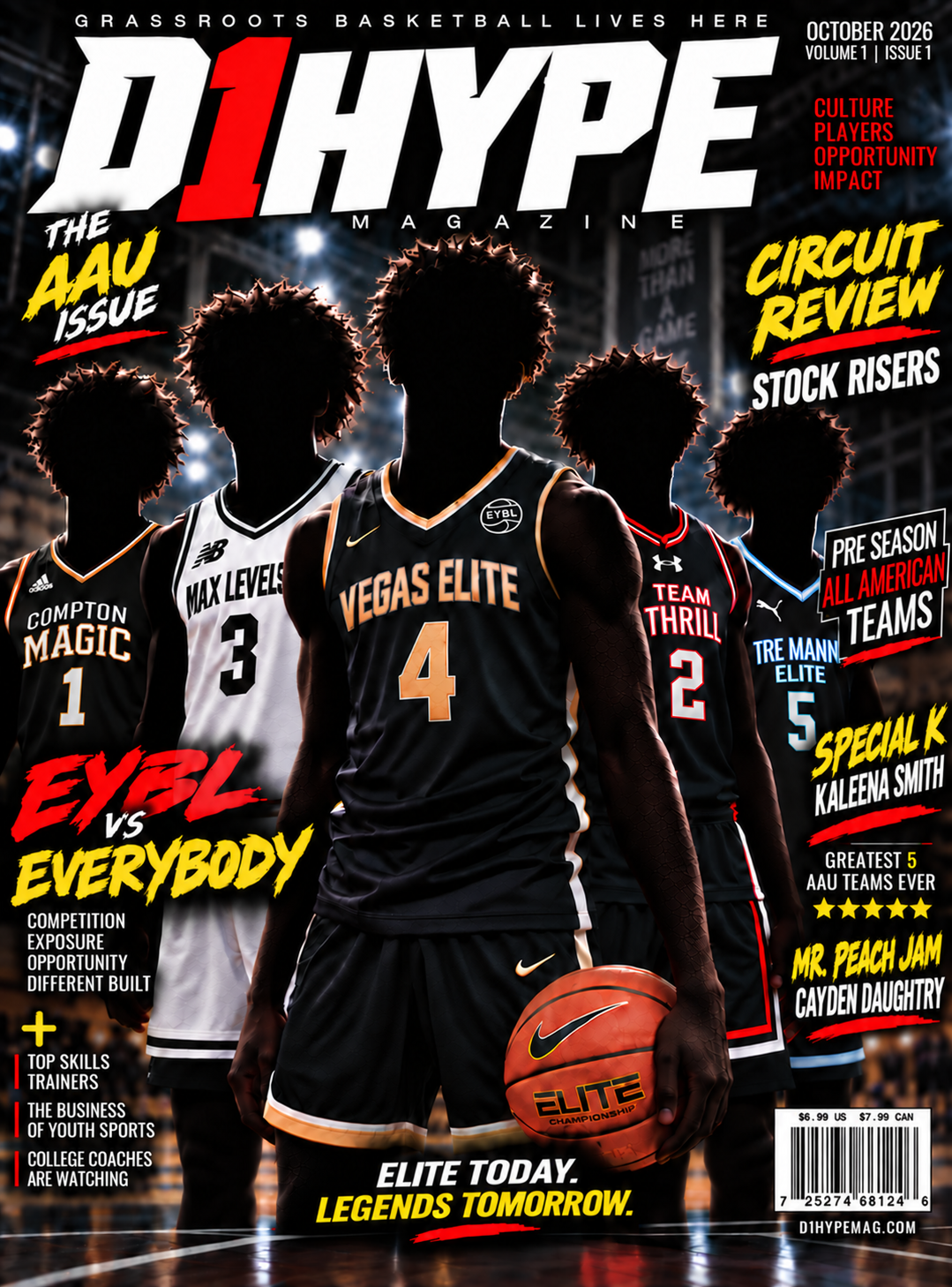
D1HYPE ranks single season boys teams by the strength of their roster, what they accomplished together and the mark they left on grassroots basketball. This is an editorial selection, not an official AAU record book. The 1994 CMH 76ers open the countdown at No. 5, while Riverside Church takes the top spot.
CMH Kansas City 76ers
The 1994 CMH Kansas City 76ers open this countdown at No. 5 with a remembered record of 72 wins and one loss. In a July 1994 Los Angeles Times report, New York Riverside Church defeated a team identified as Kansas City Blue, 56 to 53, in the Nike Slam N Jam championship game in Southern California. The report named Derek Hood and Manny Dies among Kansas City Blue’s players. Across a schedule that long, one defeat tells its own story: opponents had chance after chance to solve the team, and almost none did.
Players: Derek Hood, Glendon Alexander, Tyrone Lou, Kris Weems, Jamal Walker and Manny Dies.
Summer basketball asks a roster to win in unfamiliar gyms, through travel, changing matchups and games that can arrive only hours apart. A season with 72 victories speaks to the talent and persistence of a full roster. The CMH 76ers sustained their edge when a tournament weekend stopped feeling new.
Southern California All Stars
Kevin Love and Brandon Jennings gave this group two very different ways to control a game. Love could command the paint and the glass. Jennings could change the pace in a few dribbles. Renardo Sidney and Taylor King added to a roster with size and scoring.
Historical accounts credit the team with major wins at the Las Vegas Big Time event and against some of the most closely followed prospects of its summer. The case for this team is not simply its list of future names. It is the range of problems those players could present in the same game.
Spiece Indy Heat
Greg Oden and Mike Conley would later take Ohio State to the national championship game as freshmen. On this roster, they were joined by Daequan Cook, Josh McRoberts and Eric Gordon. It was an extraordinary concentration of future talent from one region.
Oden supplied a presence around the rim that reshaped possessions. Conley gave the group control in the backcourt, and its scoring options made loading up on one player a dangerous plan. Spiece belongs here because its roster looked formidable in the summer and its players continued to matter long after it ended.
Atlanta Celtics
Dwight Howard and Josh Smith shared the front line, a pairing that could turn an ordinary drive into a challenge above the rim. Historical rankings also associate the team with Randolph Morris and other major prospects.
The Celtics are remembered for their physical reach and for winning the adidas Big Time in Las Vegas. Their place in this five rests on a rare combination: elite size, explosive athleticism and the ability to make even strong opponents play a different kind of game.
Riverside Church
Ron Artest, Lamar Odom and Elton Brand on one summer roster sounds like an argument assembled after the fact. They actually shared the court. Eric Barkley added another prominent guard to a team with strength, versatility and the confidence of New York basketball behind it.
Riverside's reputation endured because the talent worked as a team. A forward could handle, a center could impose himself inside and opponents had to account for threats across the lineup. Coach Ernie Lorch's program built a standard that still enters conversations about the greatest summer groups.
D1HYPE gives Riverside the top spot for a rare balance of future star power and a team identity that held together against elite summer competition. Its legend rests on more than the careers that followed.
What makes a summer team great?
Future NBA careers can make a roster famous, but they cannot win a game retroactively. The strongest case combines what a team did during its own summer with how well its players performed together. Chemistry, resilience and repeated wins deserve weight beside the names that appear on a roster years later.
There will always be a challenger from another city or another generation. That is the beauty of an all time AAU debate. For D1HYPE, Riverside Church leads this five. The 1994 CMH Kansas City 76ers remain essential to the debate: 72 wins, one loss and a story that still demands to be told.
THE GREATEST TEAMS GIVE EVERY GENERATION SOMETHING TO ARGUE ABOUT.
Editor's note: This ranking is D1HYPE editorial analysis. The Los Angeles Times documented the 1994 championship result and identified the Kansas City team as Kansas City Blue, with Derek Hood and Manny Dies in its coverage. The report does not use the CMH 76ers name or establish a season record. The 72 wins and one loss figure and full six player list remain D1HYPE’s account; a complete independent game ledger was not available in the public sources reviewed. Details on the other teams draw on historical roundups from Prep Hoops and Legends. Such lists sometimes describe changing summer rosters differently, so the selections should be read as an editorial comparison rather than an official championship table.