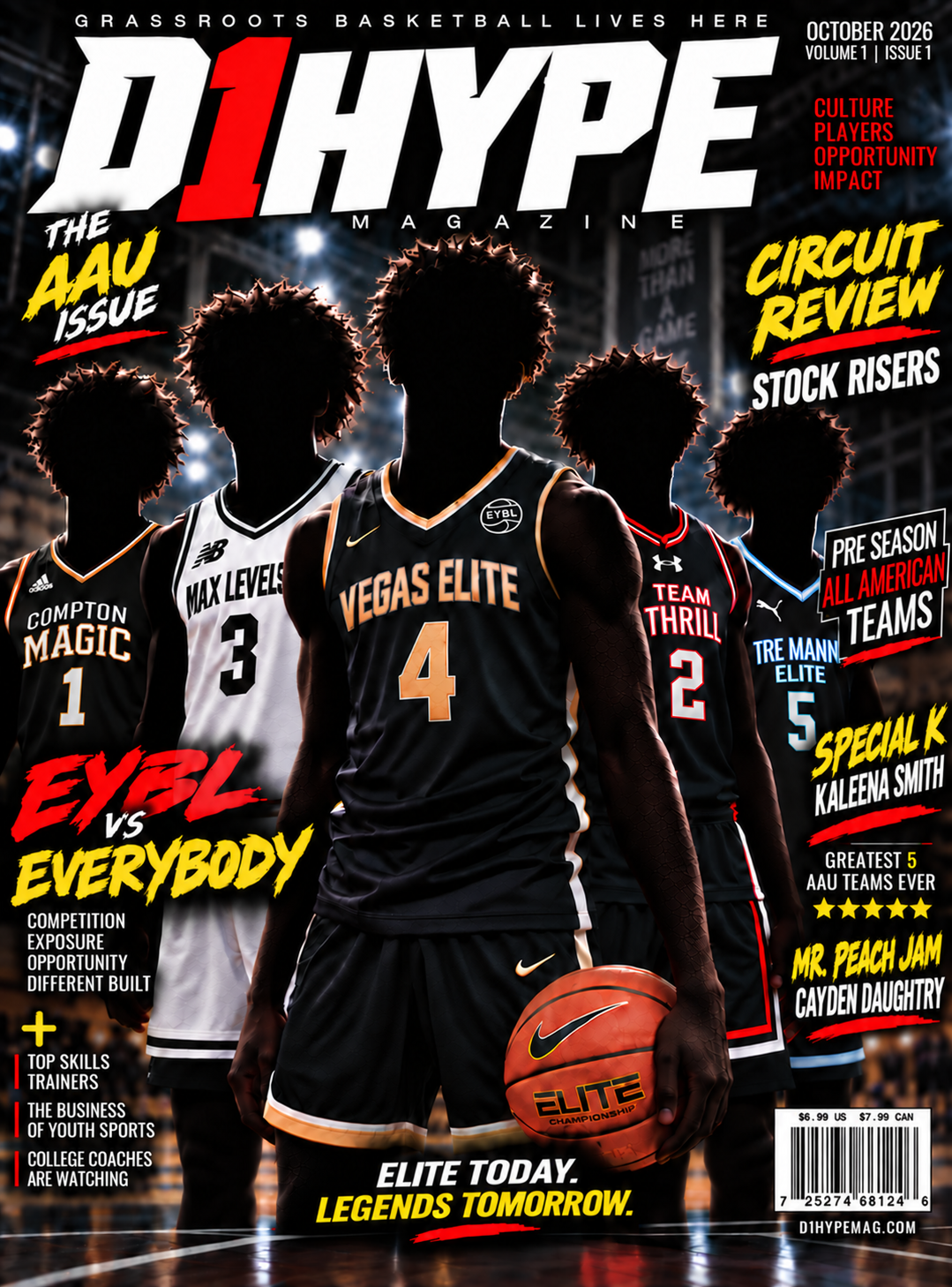
Every July, another gym fills with college coaches, scouts and families watching the next group of prospects. The logo at center court may vary, but the comparison usually circles back to Nike's Elite Youth Basketball League. EYBL has become the reference point in grassroots basketball.
Nike did not invent summer basketball. Established AAU programs, camps, tournaments and shoe sponsorships all came first. When EYBL launched in 2010, Nike brought leading sponsored programs into a recognizable national season with recurring sessions, results and a destination at Peach Jam. Membership itself became a marker of status.
How Peach Jam became the destination
Peach Jam predated the league, but its place as the circuit's championship gave the summer a clear climax. North Augusta became a gathering point for highly recruited players and the people who evaluate them. Its history cannot be reproduced simply by renting more courts.
Nike's advantage is a cycle. Top players seek strong competition. Programs recruit those players. Coaches and scouts follow the concentration of talent, media follows the games and younger athletes see a path they want to join. The brand attracts talent, and the talent strengthens the brand.


Talent lives beyond one logo
High level prospects also compete in adidas 3SSB, Under Armour UAA, PUMA PRO16 and independent events. EYBL's distinction is concentration, not exclusive ownership of talent. A college staff with limited evaluation time can see several players on its recruiting board within a single session. That efficiency matters.
An EYBL roster can offer serious competition, film, statistics, scouting attention and repeated chances to face top opponents. It cannot guarantee an offer. Players outside the league can still be recruited through strong performances against credible competition.
The challengers choose their lanes
adidas pairs the 3SSB team circuit with the revived ABCD Camp, an individual setting that can bring players from different affiliations together. Under Armour has produced strong prospects through UAA and built youth development programs, though it faces the difficult task of competing with EYBL's cultural pull.
PUMA's PRO16 sits at the elite end of a wider structure that includes NXTPRO. The company has described a large footprint and has pursued grassroots NIL relationships. MADE Hoops found influence at an earlier stage through middle school leagues, camps and events, building relationships before many athletes reach the shoe circuits.
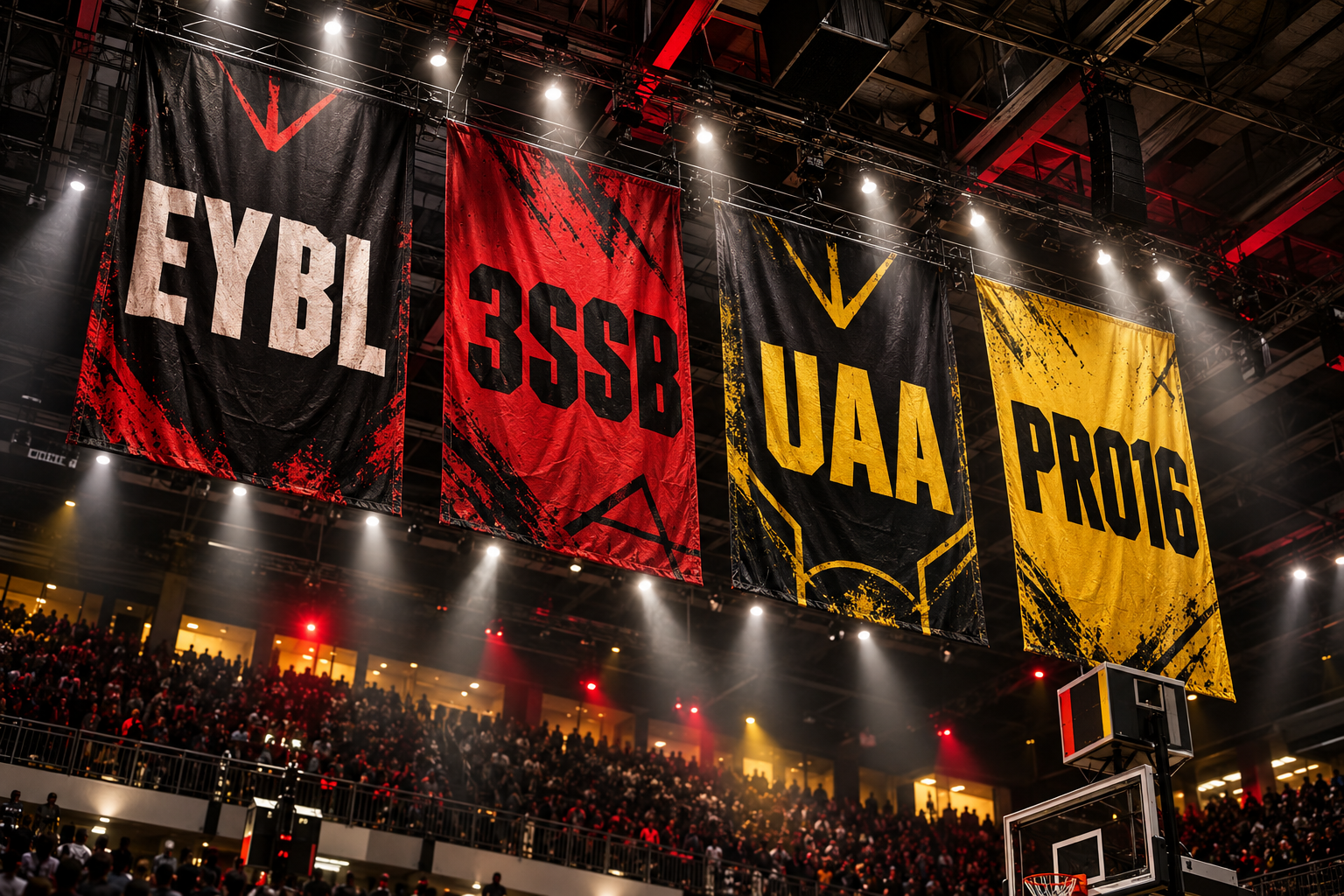
Nike has broadened its own pathway through EYBL Champions for 15U, 16U and 17U teams while keeping Peach Jam as a major prize. The move expands the funnel without making its highest level unlimited.
The people who control access
Nike and EYBL administrators shape program participation. Within those programs, directors and coaches decide roster opportunities. Their roles are different, but each decision can affect a young athlete's access to a valuable platform. Families deserve clear information about selection, costs and obligations.
Professional players have become part of this landscape as well. Chris Paul, Kevin Durant, Bradley Beal, Paul George, Russell Westbrook, Carmelo Anthony and others are connected to grassroots programs. Team CP3 competes in EYBL, and Paul's coaching presence shows why direct contact with experienced professionals can appeal to a young player.
Athlete backed programs can bring mentorship, product, travel support and facilities. They can also sit beside camps, sponsors, media ventures and NIL interests. Families should understand who owns and funds a program, who operates its events and how player images or data may be used. Those are ordinary governance questions, not allegations against a particular organization.
Measuring the circuits
Public figures do not provide comparable annual operating budgets for EYBL, 3SSB, UAA and PRO16. Product, travel, event production, staffing and marketing all cost money, but corporate totals cover much more than grassroots basketball.
Circuit strength can be studied more carefully through player outcomes. McDonald's All American rosters, USA Basketball junior national teams and NBPA Top 100 participants offer potential measures. Affiliations would need to be checked player by player across several years, since rosters do not publish a simple circuit breakdown and athletes may change programs.
.jpg?width=1280)
.jpg)
A race with more than one finish line
A challenger can copy the visible pieces of a circuit: uniforms, events, broadcasts and scoreboards. It takes longer to build alumni ties, trusted programs, coaching habits and a championship players already know. That helps explain EYBL's position, but it does not make the competition static.
adidas can build an individual proving ground. PUMA can expand its developmental reach. Under Armour can deepen its teaching model. Independent platforms can create paths for teams outside shoe contracts. New approaches to film, data, NIL and international play may change the terms of the contest.
The logo can help a player enter the conversation. Performance must carry the rest. As long as prospects have choices, EYBL will have competition.
THE PLAYERS STILL OWN THE GAME.