
The college coach has found a seat along the baseline. There is a school polo, a colored wristband and perhaps a packet of player information. On the court, a young athlete sees that presence and decides to shoot more. The evaluation, however, may have started before the first possession.
Coaches can watch warmups, listen to communication and notice what happens when a player misses or is taken out. They are assessing basketball ability and the habits that come with it. A player does not need a career night to leave an impression.
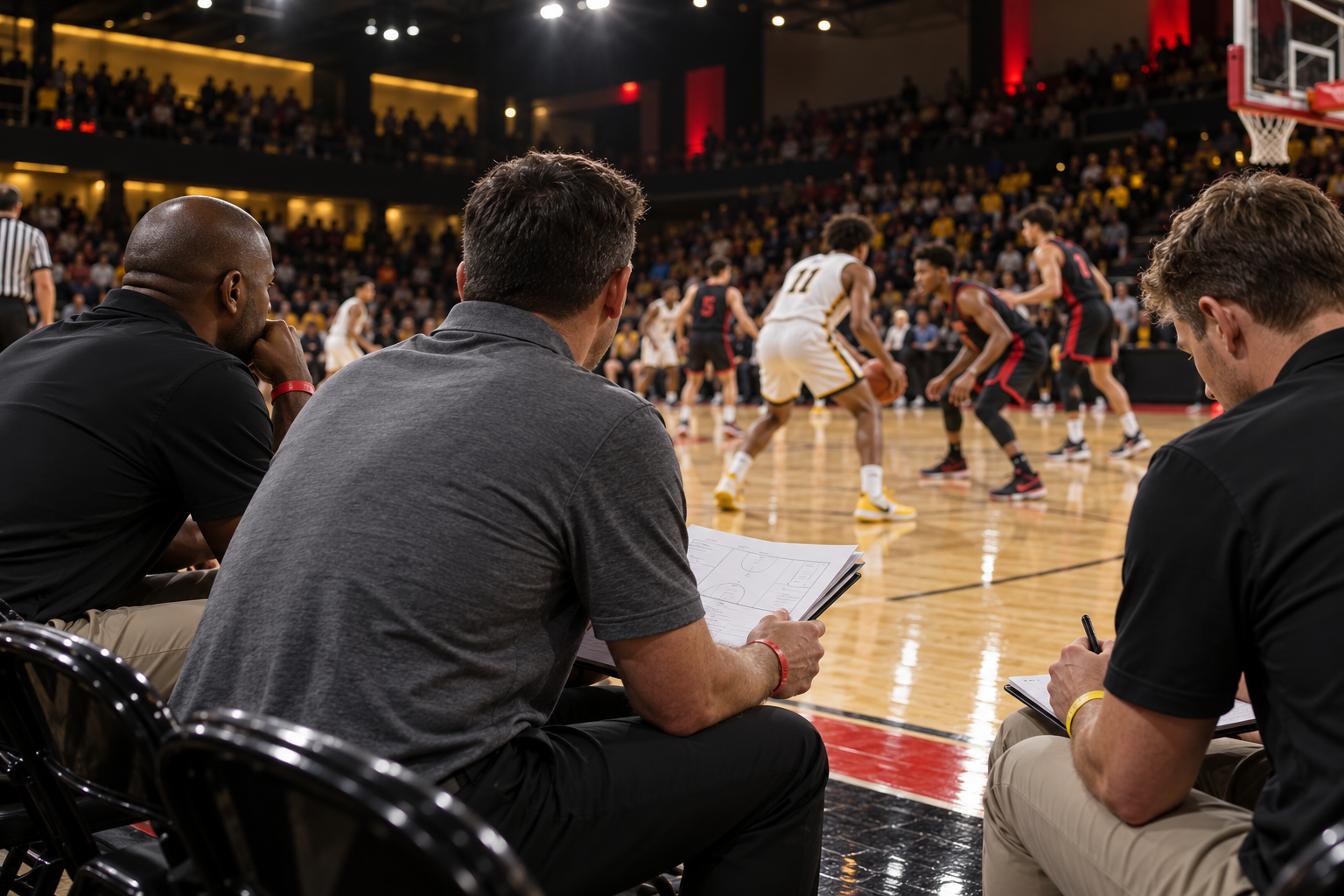
What the coach sees
The staff member in the gym may have come for somebody else. An unranked player who guards the headline prospect, makes the extra pass and runs back after a turnover can still earn a name in a notebook. The game offers many ways to be noticed.
Trying to manufacture a highlight can work against that goal. A point guard who abandons the offense to hunt shots, or a big who forces moves he has not practiced, gives a coach different information from the kind he intended. Play the role that makes the team better. Good decisions are easier to trust than forced ones.
Defense is particularly revealing. Fight through screens, talk through switches, close out, rebound and sprint back. A steal attempt that leaves a teammate exposed is less useful than a sound possession. Coaches also notice how an athlete cuts, spaces, screens and helps when the ball is elsewhere.
The moments between plays
Body language is visible from the baseline. After a missed shot, does the player complain or defend the next possession? On the bench, is the player listening and supporting teammates? After a correction, does the response show attention or resistance? Mistakes are inevitable. The response tells a coach whether the player can keep learning.
Officials will miss calls. A respectful question can be appropriate, but a running argument takes attention away from the game. The player who moves on quickly shows composure when a possession has gone wrong.
Coaches also speak with high school and grassroots staffs, trainers and people around a program. Repeated habits become a reputation. Reliability, effort and coachability can support a recruiting case that statistics alone cannot make.
Your public life travels too
A coach can leave a gym and find a player's public social account that night. Posts attacking teammates, coaches or officials, sharing threats or bullying, or complaining about another athlete's offer can follow a player into an evaluation. Reposting carries an association as well.
That does not mean young athletes need to erase their personalities. Basketball, music, friends and family belong in their lives. The practical rule is to handle team problems privately and think about how a public post will read to someone who does not know the context.
Another player's offer is not a lost opportunity for you. Recruiting timelines differ. Congratulate a teammate and return to your own work.
Parents have a role
The family may be part of the picture a college staff sees. From the bleachers, a parent can provide encouragement without giving a second set of instructions. A player already has to read defenders, the score, teammates and the coach on the bench. A shouted command from the stands can make the decision harder.
Arguments with officials, confrontations with coaches and visible frustration after every mistake can also put pressure on the athlete. Playing time and development concerns are better discussed privately, at an appropriate time. When a college coach is evaluating, let the coach watch. Appropriate introductions can be handled through the player's school or grassroots program.
For many young athletes, the ride home is already tense. A simple expression of support can mean more than an immediate breakdown of every possession. Feedback can wait until the player is ready to hear it.
A short recruiting checklist
- Do I compete when I'm not scoring?
- Do I defend?
- Do I communicate?
- Do I make teammates better?
- Can I accept coaching?
- Do I respond correctly after mistakes?
- Is my body language helping me?
- Can I impact the game without the basketball?
- Would anything on my social media concern someone recruiting me?
- Do I respect officials and opponents?
- Does my family allow my coaches to coach?
Rankings, the opponent's offers and the staff members in attendance are outside a player's control. Effort, communication, defense, decision making, attitude and preparation are not. When the college coach walks in, keep playing the game that brought you there.
PLAY BASKETBALL THE RIGHT WAY.
You never know who came to watch, or whose name they will remember on the way out.